
Journey to a Service Dog
Help me to raise funds to train my own specialized service dog. I am dedicated to training Chevelle (with the help of Leashes and Leads, in Byron MN and Coastal Service Dogs), who can assist me with my daily tasks and provide the independence I deserve.
My Story. My Illnesses.
My Story. My Illnesses.
My Story
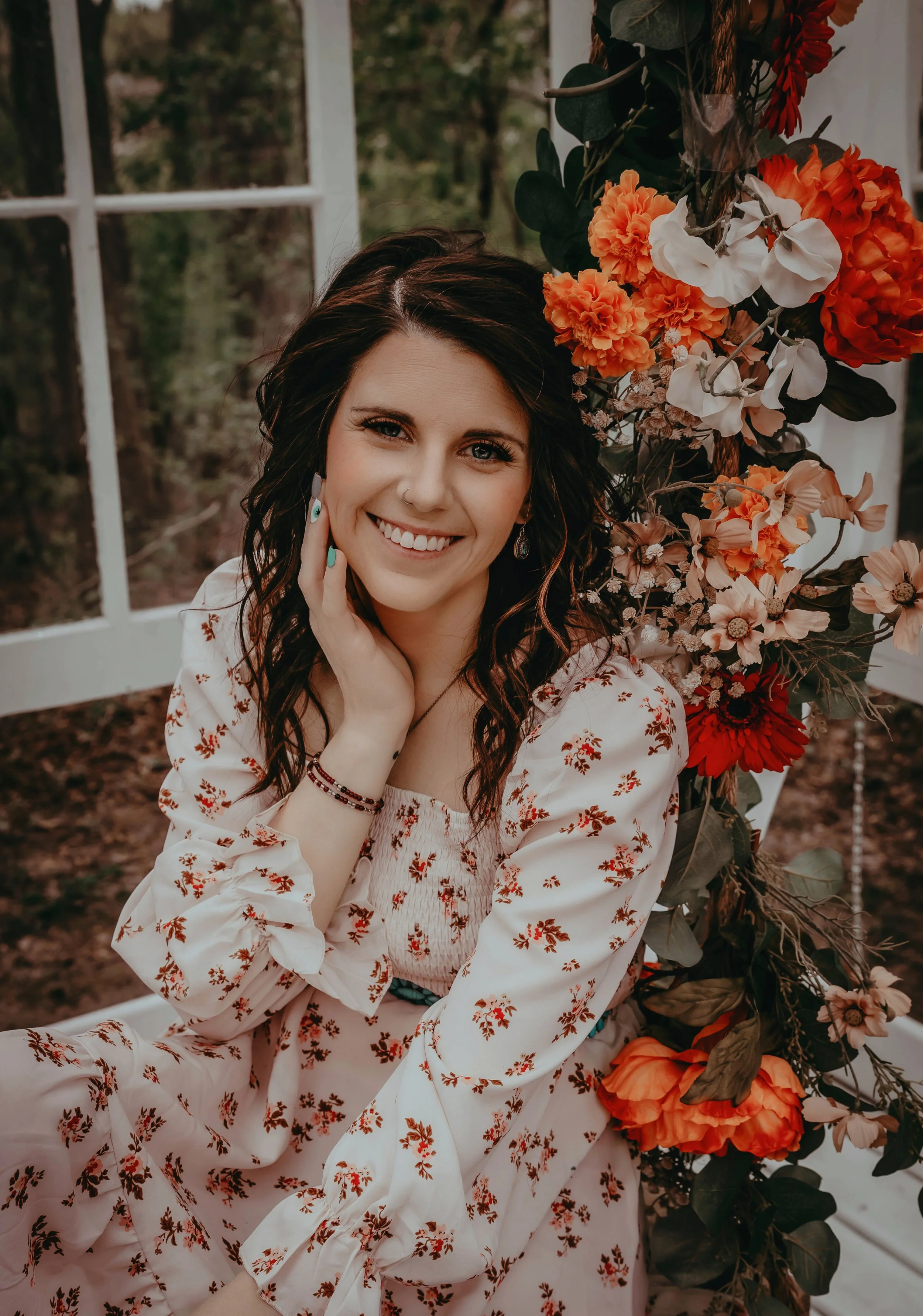
Living with a combination of complex chronic conditions, presents unpredictable challenges every single day. I often have to give up valuable time with my family to save my body from having to pay for it later. These illnesses drastically impact my physical safety, mental well-being and autonomy.
My Illnesses:
With dealing with cPTSD, Bipolar 1, anxiety and panic attacks, many challenges present at inconsiderable times with little warning.
Phsychiatric Illnesses
This causes sudden dangerous spikes in my heart rate and severe dizziness, making simple tasks like standing and bending over a fainting risk. There are many more daily symptoms that can arise with this illness also.
Postural Orthostatic Tachycardia Syndrome
A genetic connective tissue disorder that causes frequent joint instability, chronic pain and high risk of injuries. Like POTS, there are many more daily symptoms that can arise as well.
Hypermobile Ehlers Danlos Syndrome
A complex neurological condition defined by experiencing headaches on 15 or more days/month for more than 3 months, with at least 8 of those days meeting the criteria for a full migraine attack.
Chronic Migraines
Journey to my Dog…
Phase 1: Dog Finding - But I already have her!
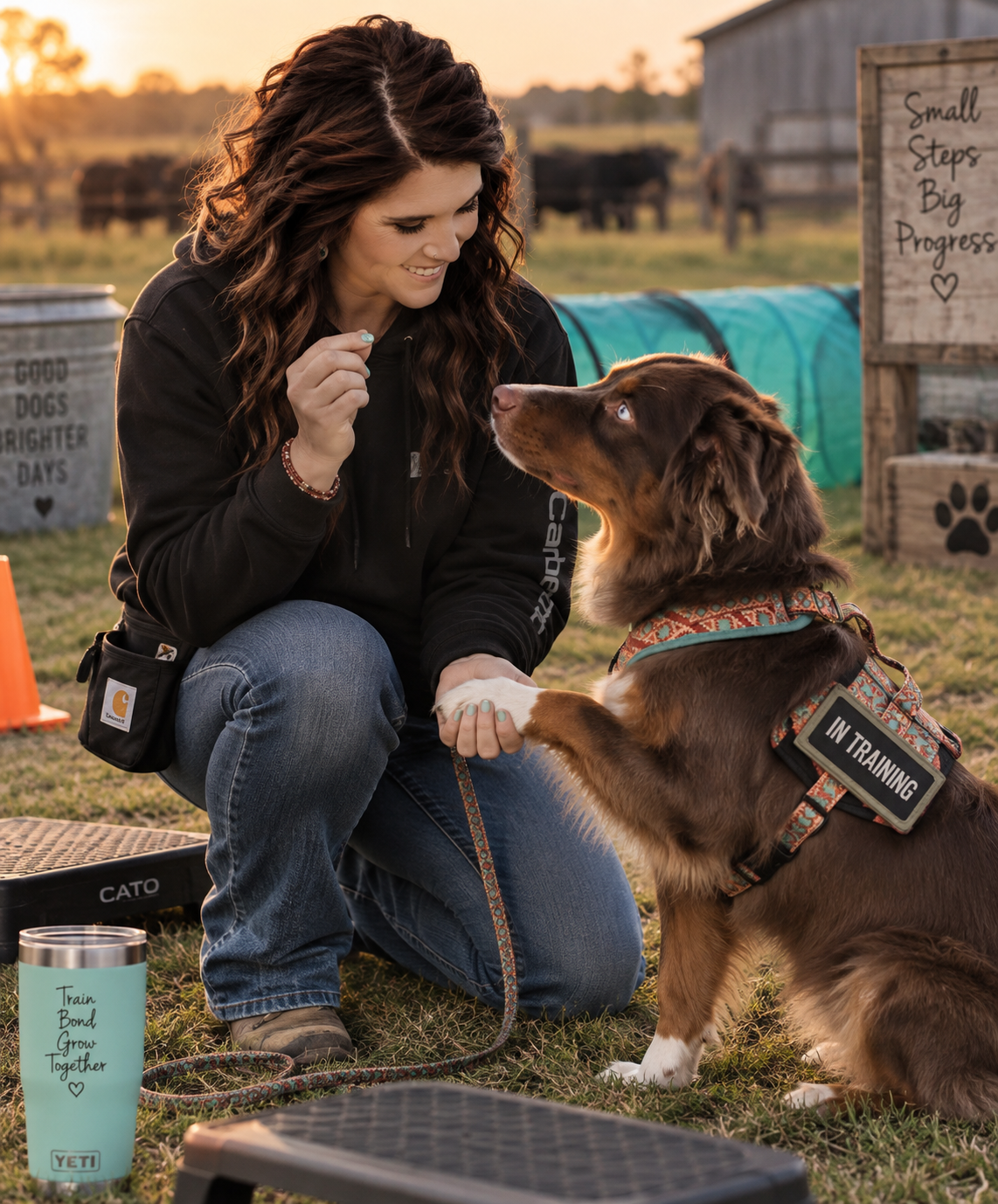
Chevelle is my own dog, and our journey toward becoming a working team will begin together. Rather than being matched with a puppy through a program, I will be learning and training alongside Chevelle, building on the bond and trust we already share.
With guidance from Coastal Service Dogs, we will work on developing Chevelle’s obedience, confidence, focus, public-access skills, task work, and ability to support me in my everyday life. Her individual personality, temperament, strengths, and areas that need continued work will all be taken into consideration as we progress.
This journey will take patience, consistency, dedication, and a lot of teamwork. We will grow and learn together, with the goal of helping Chevelle become a highly trained service dog while strengthening the partnership between us. She isn’t simply being trained to perform tasks—she is becoming an important part of my everyday life and an incredible teammate for the journey ahead.
Phase 2: The Training
Throughout the training program, Chevelle and I will meet virtually with our trainer once a week for personalized guidance, progress updates and support. We will also have 24/7 access to online training courses, along with the ability to contact our trainer whenever questions or concerns come up. Each week, our trainer will assign homework and specific skills to practice, so we can continue building on what we’ve learned. The program is projected to take about 7-8 months, usually the goal of having most of the training completed by a dogs 1st birthday, but Chevelle being older we will work with her age as is. Before being considered ready for service work, puppy will complete four evaluations:
Canine Good Citizen (CGC)
Canine Good Citizen Advanced (CGCA)
Canine Good Urban (CGCU)
Public Access Test (PAT)
These tests help ensure Chevelle is well-mannered, reliable, confident and prepared to work appropriately in a variety of public environments. The program also includes some of the essential gear needed to being training, including a slip leash and a program vest. If needed the vest can be exchanged with a proper size for any growing.
Phase 3: Ready for Service Work
Once the training program is complete and all required tests have been successfully passed, our journey doesn’t end it truly begins. We will officially move forward as a team, continuing our life together with Chevelle by my side, providing assistance and support I need each day. Coastal Canine will provide three follow-up meetings after the completed program to help make sure our skills stay strong and our partnership continues to grow. These sessions will give us an opportunity to address any areas that may need a little work and to keep everything on track. Beyond the follow-ups, we will never be on our own. If questions, concerns or new challenges come up. Coastal Canine will continue to be there to provide guidance and support.
This is more than simply completing a training program - it’s the beginning of a lifelong partnership between Chevelle and I.
Tasks my dog will provide . . .
Tasks my dog will provide . . .
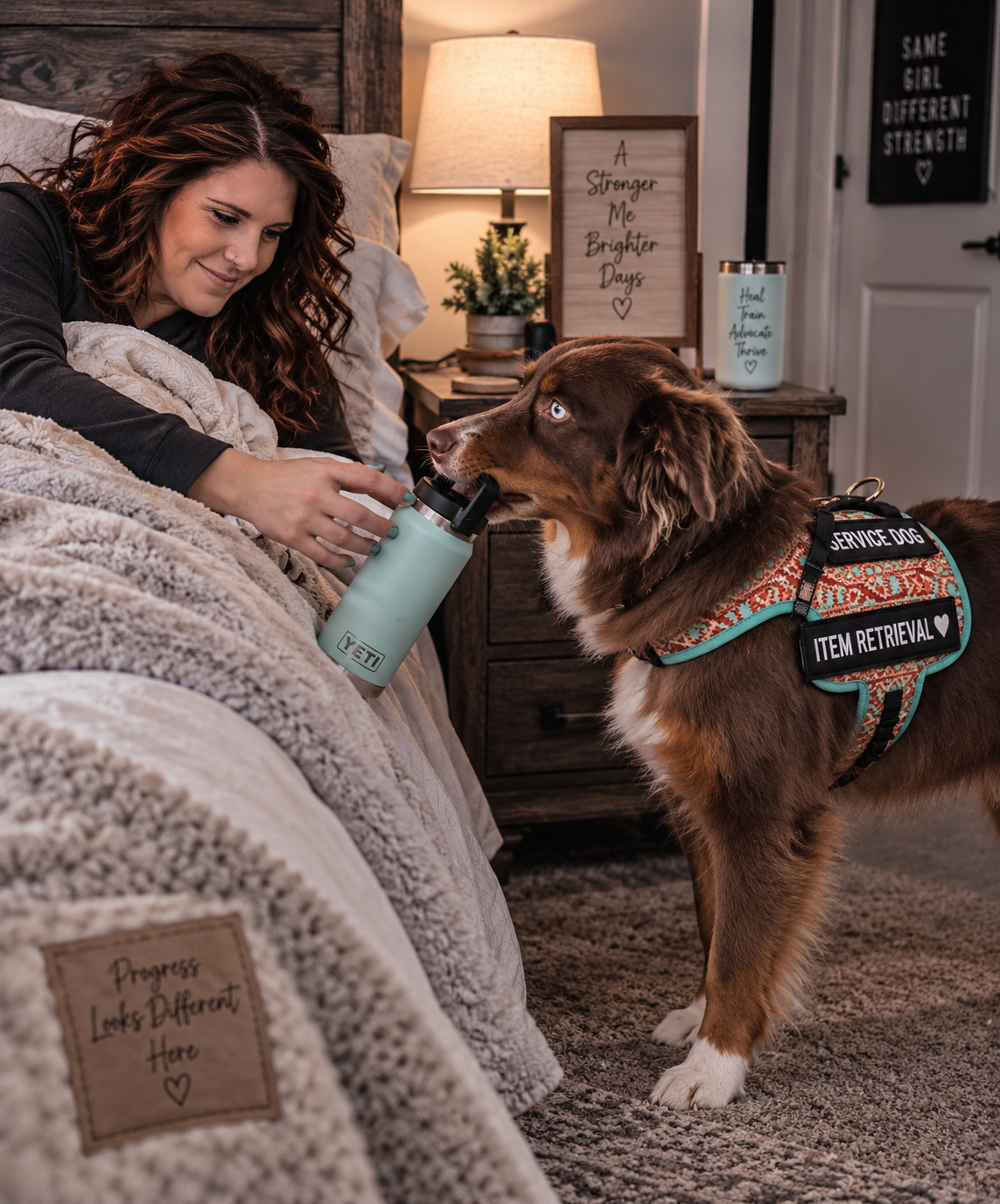
Chevelle will be trained to retrieve items I may need throughout the day-like hard days that I am feeling extra sick. Including medication, water, phone or objects I may accidentally drop. This assistance will help me avoid unnecessary strain and make everyday tasks more manageable, while giving me greater confidence in my daily life.
Item Retrieval
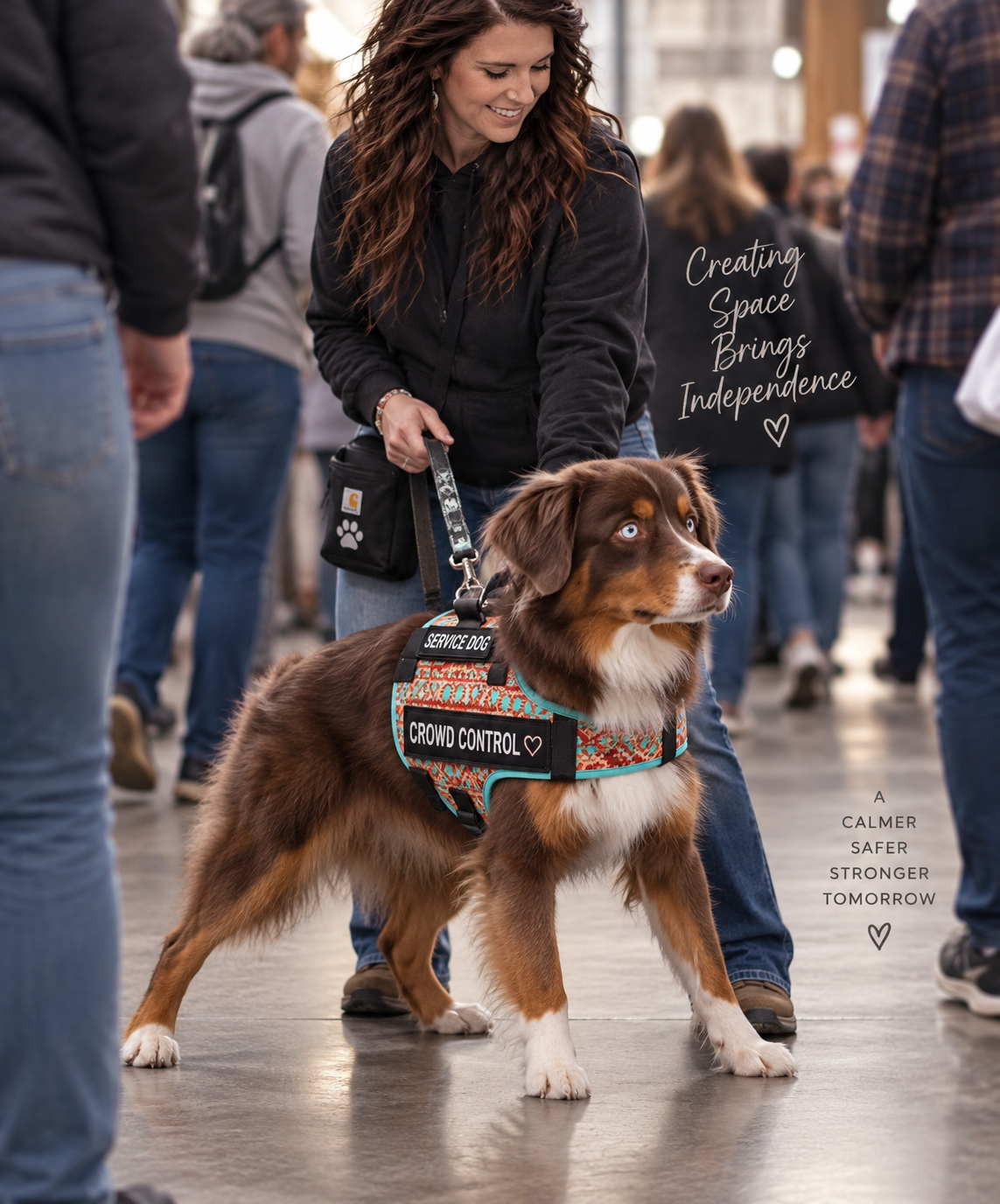
In crowded or overwhelming environments, Chevelle can help create a comfortable amount of personal space around me, allowing me to move through public areas with greater confidence and security.
Behavior interruption means Chevelle will be trained to recognize certain behaviors or signs that I may be struggling and respond with a trained cue to help redirect me. This could look like interrupting repetitive or escalating behaviors, prompting me to refocus or bringing my attention back to my surroundings.
A task related to these, is also Deep Pressure Therapy (DPT)
Crowd Control & Behavior Interruption
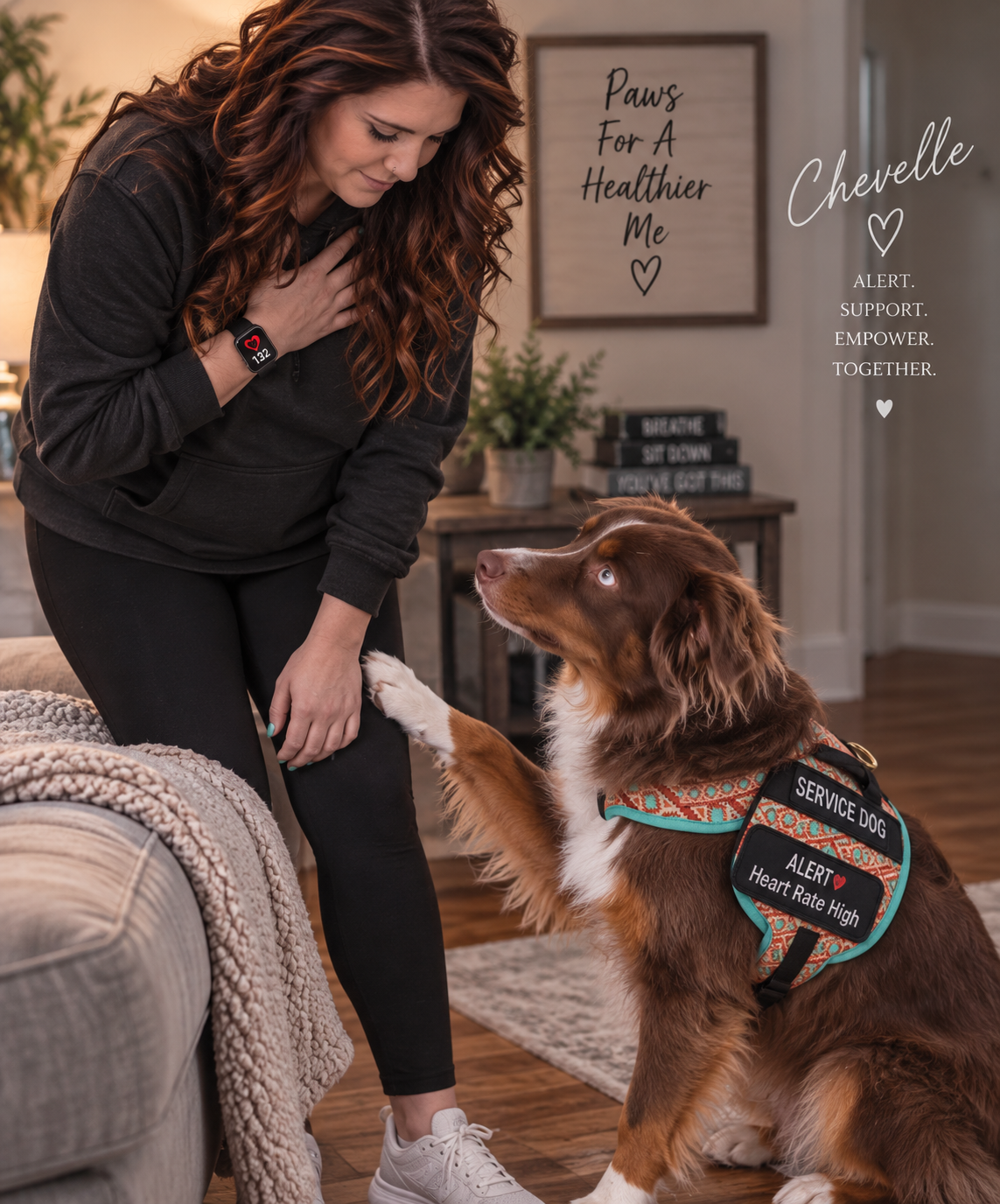
Chevelle will be trained to recognize changes in my body that may include a potentially dangerous change in my heart rate or blood pressure, which leads to dizziness and sometime fainting. By alerting me to these changes, my dog can give me the opportunity to stop, sit down and if needed take action to seek help before a more serious situation arises.
POTS alert (BP & heart rate)
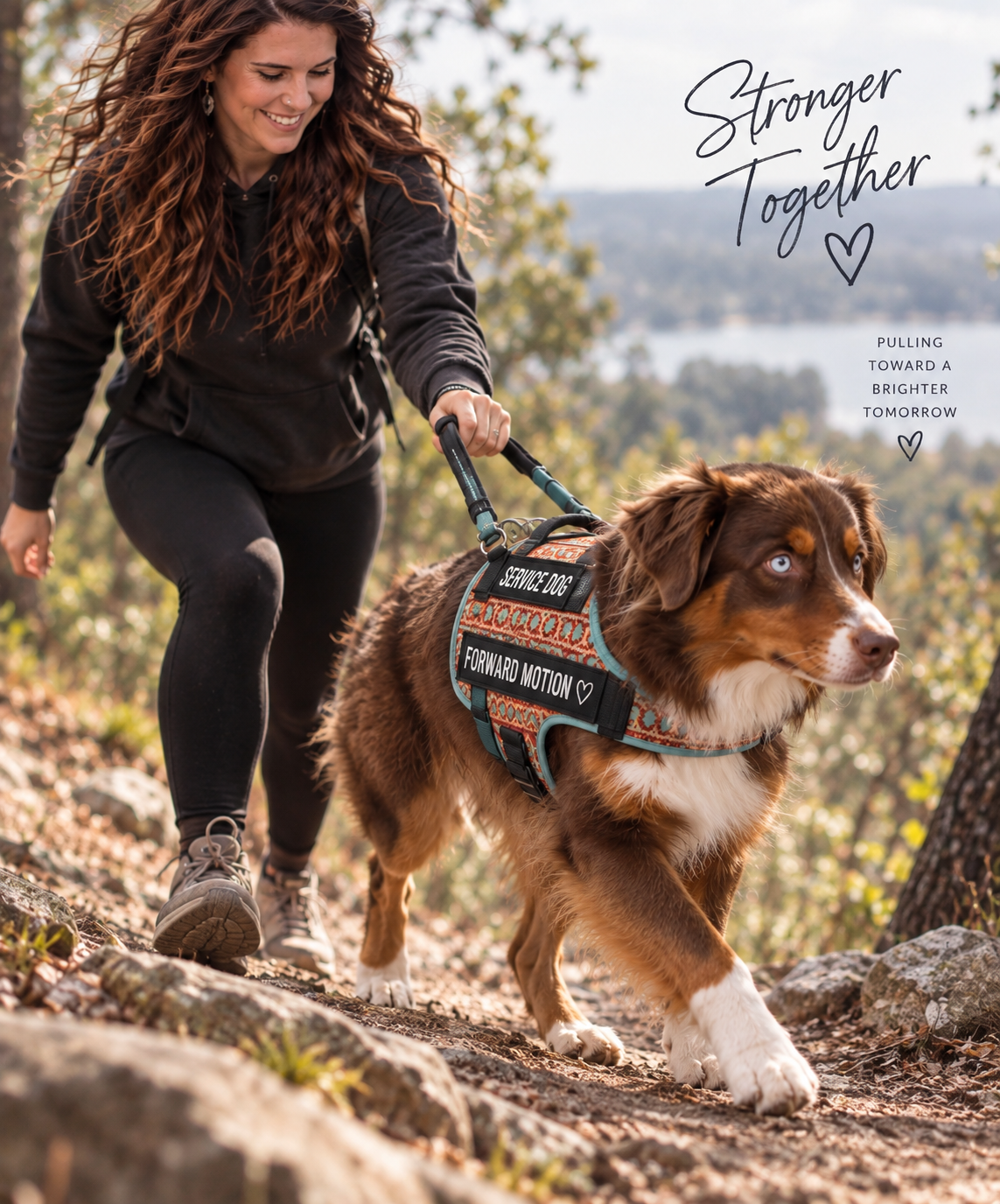
Chevelle will be trained to provide counterbalance assistance when I am feeling unstable or unsteady, helping me maintain my balance and navigate about safely. She may also provide forward-motion assistance when I am more fatigued or going uphill, using a special small handle designed specifically for this task. These skills will help me conserve my energy, improve my stability and allow me to move through my day with better confidence and independence.
Mobility
Thank You!
Training a multi task service dog requires hundreds of hours of expert guidance, specialized public access training and rigorous testing. Because Chevelle needs to handle scent alerts, mobility support and psychiatric tasks - the financial investment is significant.
My fundraising goal (ultimately) is $9,500
Every dollar raised will go directly towards:
Tuition and fees for specialized service dog training through Leashes & Leads and Leads and Coastal Service Dogs.
Advanced task training sessions (psychiatric care, scent work, stability work and public access)
Custom medical gear, including specialized mobility harness and training vest.
Ongoing health clearances and specialized veterinary care required for working dogs.
Follow Along
Follow my journey to my full trained service dog Chevelle, and to see what and where your kind and very much appreciated donations are being put to use.